David Hyde
Reporter
About
David’s people-focused politics coverage tracks local and national races. At KUOW, David has also reported for our Hearken Team answering listener questions,and covered a variety of other topics ranging from vaccine hesitancy to climate change.
Previously David worked as talk show producer and also frequently hosted interviews and live call-in segments. David's education includes PhD ABD in U.S. History from Rutgers University and a BA in History from Reed College.
Location: Seattle
Languages: English
Professional Affiliations: Society of Professional Journalists
Stories
-
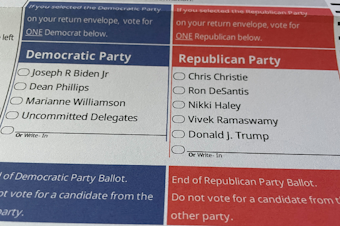
Why do I declare a party on my Washington presidential primary ballot? (And other things you should know)
Ballots for Washington's 2024 presidential primary election are now arriving in mailboxes across the state.
-

Washington's GOP divide: He’s for Trump and she’s for Nikki Haley
Mary Kay Rohrbach and her husband, Eric, are sitting nearby at a long brown table, and don't agree about who should be the GOP’s presidential nominee: the former president or his last remaining challenger, South Carolina Governor Nikki Haley.
-
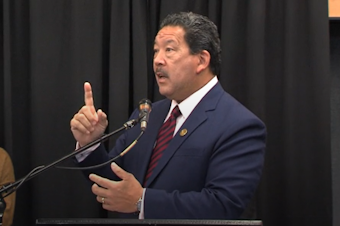
9 points from Seattle Mayor Harrell’s 2024 state of the city speech
Seattle Mayor Bruce Harrell gave his annual "State of the City" address Tuesday, leaning into the setting at the Museum of History and Industry to play up the progress he argues his administration has been making over his first two years.
-

Renton minimum wage initiative leading after initial ballot count
-
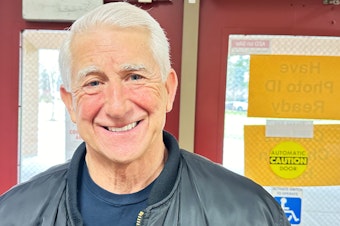
‘It’s time to kick down the governor’s door,’ Dave Reichert hopes early GOP endorsement leads to spot on WA ballot
On Saturday former Congressman Dave Reichert was firing up a crowd of fellow Republicans at Kamiakin Middle School in Kirkland, wearing his old leather King County Sheriff's jacket. “There’s a time to negotiate and a time to kick the door down. It’s time to kick down the governor’s door,” said Reichert, who’s running for the state’s highest office this year, a task he compares to his time leading SWAT teams.
-
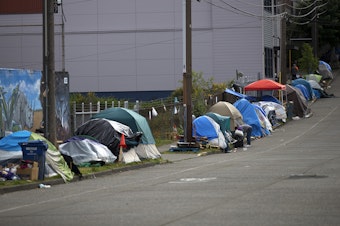
King County Homelessness Authority gets new leader, for now
-
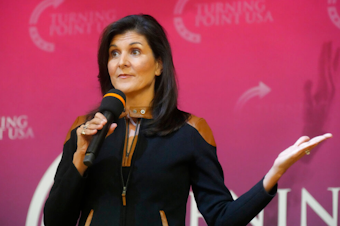
Some Washington Republicans hope Nikki Haley keeps battling Trump
The chorus of Republican voices calling for Nikki Haley to get out of the presidential race is getting louder, following her double-digit loss on Tuesday to former President Trump in the New Hampshire primary. But in Washington state, some Republicans hope the former South Carolina governor will stay the course. “It's not an easy path. It's a narrow path. I'm a realist, but to say that there's no path I don't think is true,” said Paul Hess, who is vice chair for Haley's campaign in Washington State.
-
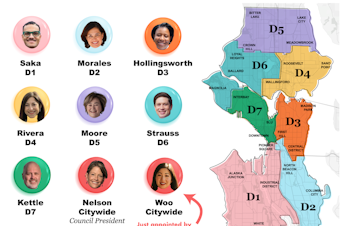
Seattle Council picks CID activist Tanya Woo to fill open seat
-

Are Washington state Republicans fully behind former President Trump?
Republicans in Congress have asked the U.S. Supreme Court to keep Donald Trump on Colorado's primary ballot, but only one of two GOP representatives from Washington state have signed on to the effort.
-

WA Republican Newhouse won’t say if he’ll endorse Trump
Donald Trump just smoked the competition in the Iowa Caucuses. But Republican Congressman Dan Newhouse of central Washington State won't say if he’ll endorse him, even if Trump ends up being the GOP nominee. Newhouse was one of just 10 Republicans in the U.S. House who voted to impeach Trump after the January 6th attack.